Past
MIRCEA ROMAN: Lupta schimbă gustul cărnii
Curatorial Text
“When I sliced into the plywood with my Skilsaw, I could hear, beneath the eardamaging whine, a stark and refreshing “no” reverberate off the four walls: no to transcendence and spiritual values, heroic scale, anguished decisions, historicizing narrative, valuable artifact, intelligent structure, interesting visual experience.” (Robert Morris, 1989)
Wood sculpture, which we can argue represents the metabolism of Romanian sculpture after thepostwar period, is configured, broadly speaking, through two approaches: the archaic carving and the modernist assemblage. In relation to the sculptural object, Mircea Roman uses wood in a manner closer to assemblage than to traditional carving. The artist fragments volumes extracted from massive pieces of wood, generally softwood like poplar, linden, willow, shaping them, only to later reassemble them through visible mechanical fastenings – nails, staples, clamps, glue – often
around the joints of his siluethes. Roman names this method „tehnica aceasta cu bucăți” (“this technique with pieces”). The volumes do not derive from a compact block, but are constituted through the juxtaposition and articulation of distinct segments.
This technique, per via della porre, as Michelangelo postulated, together with its pictorial equivalent, the collage, are what liberated the artistic object from symbolic domination at the dawn of modernism. Let us recall, in this sense, Mayakovsky’s flavorful statement regarding Vladimir Tatlin’s Tower, as „the first beardless monument”) in history. This relation to the sculptural object, characteristic of Roman, has been theorized through the
concept of factura/faktura. The concept signals a significant shift in the evaluation of artisanal competence and creative ability in the making of painting and sculpture. Factura designates the degree to which the artistic object reveals its material status and its condition of having been fabricated, disclosing in a self-reflexive manner its own principles of production.
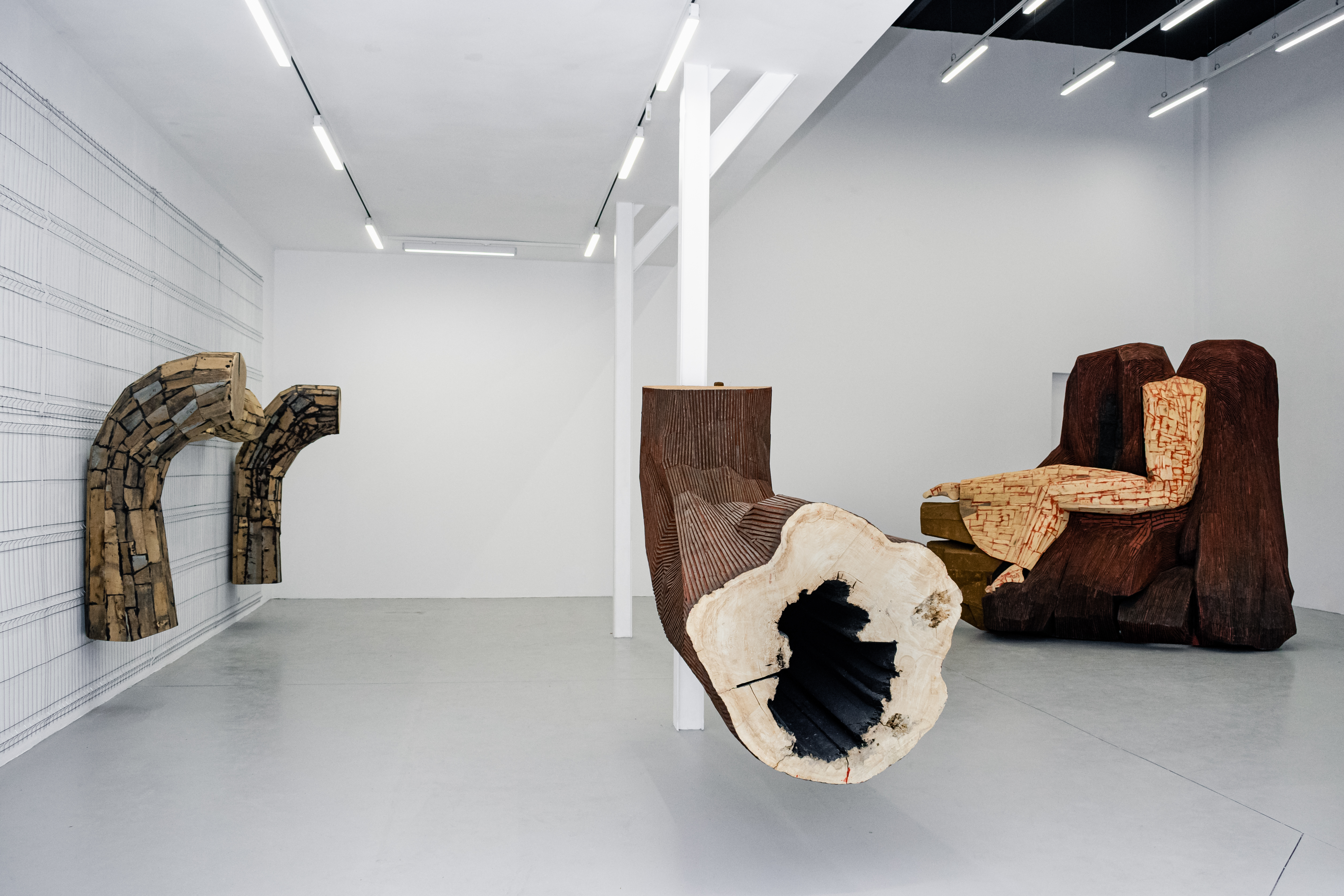
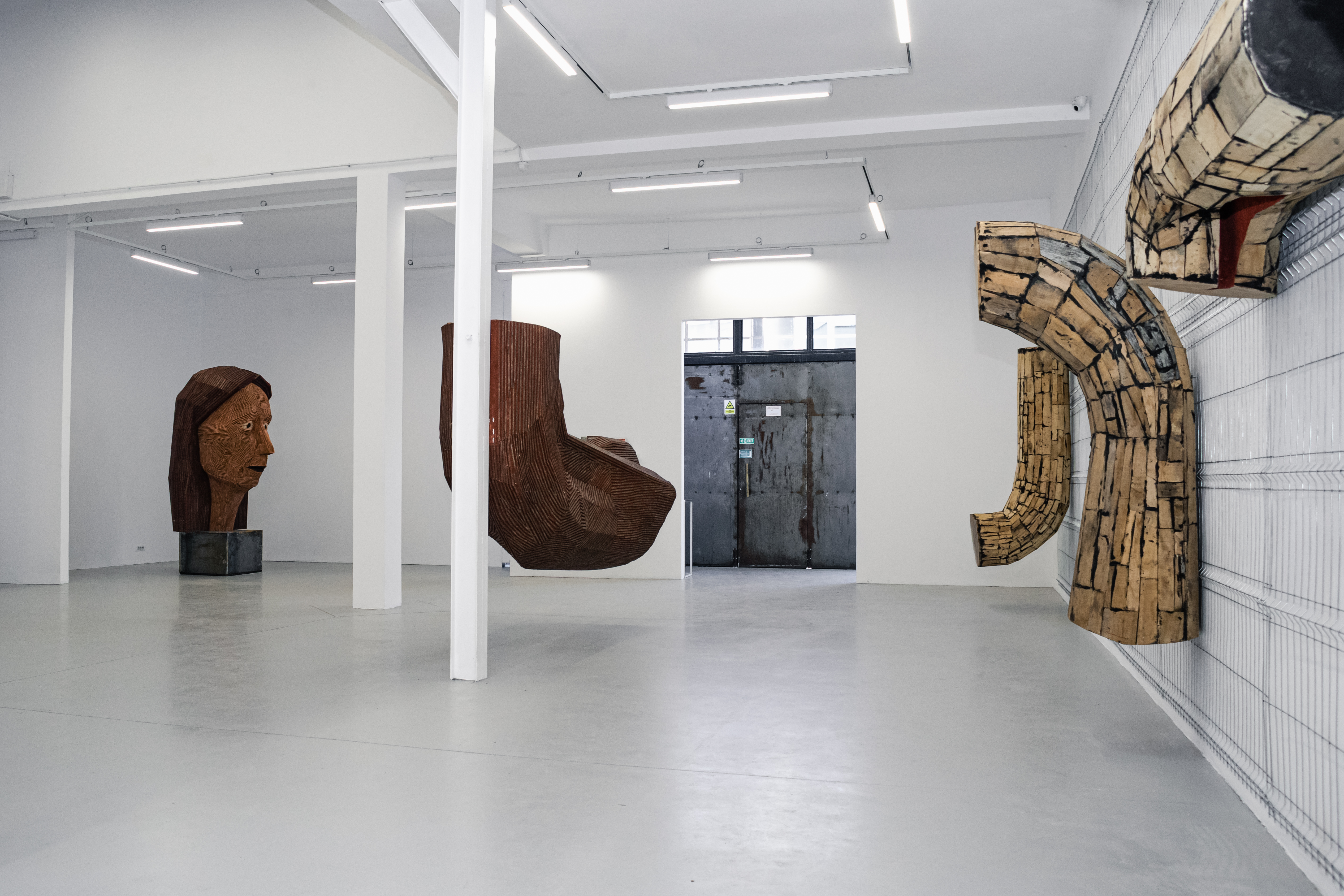
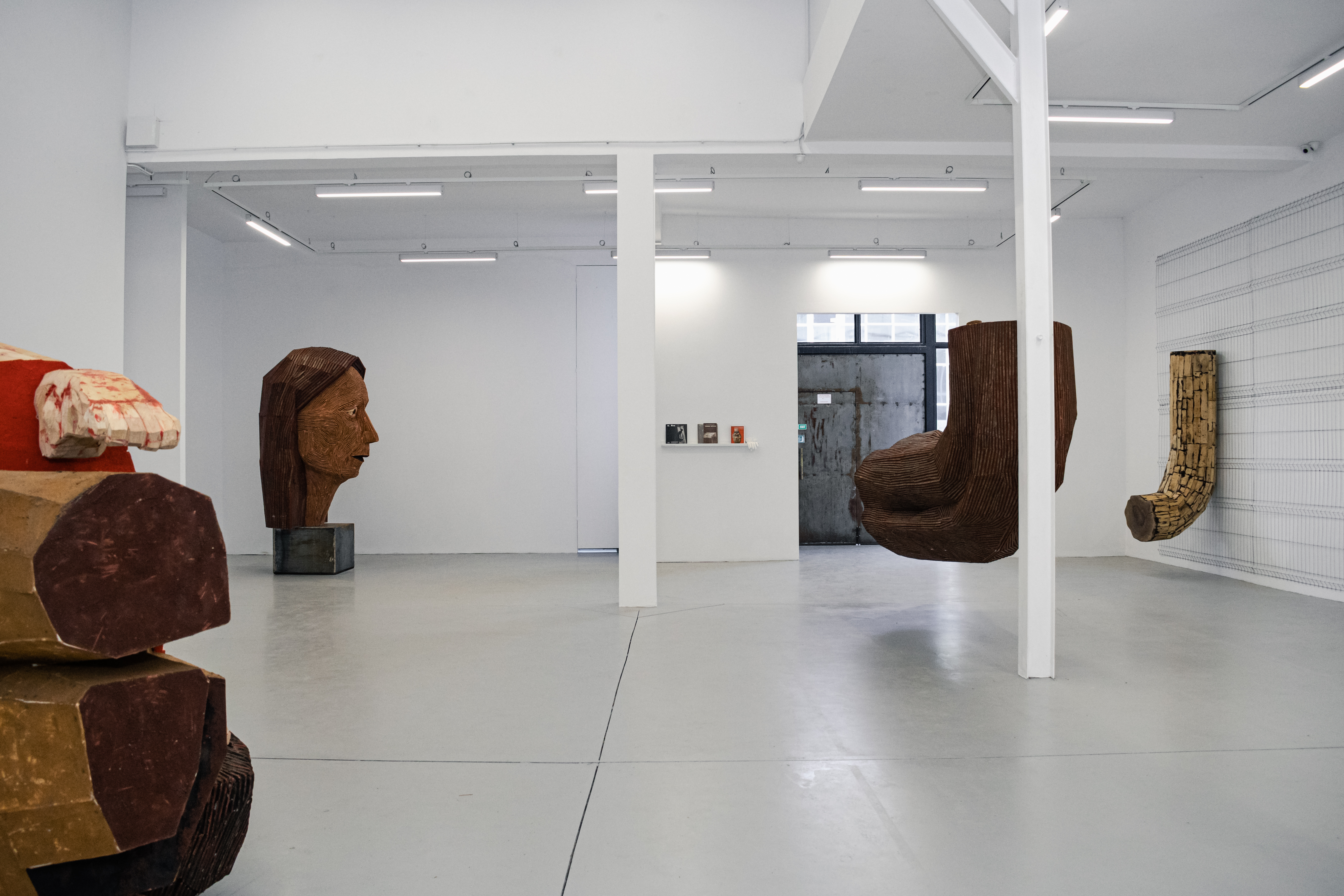
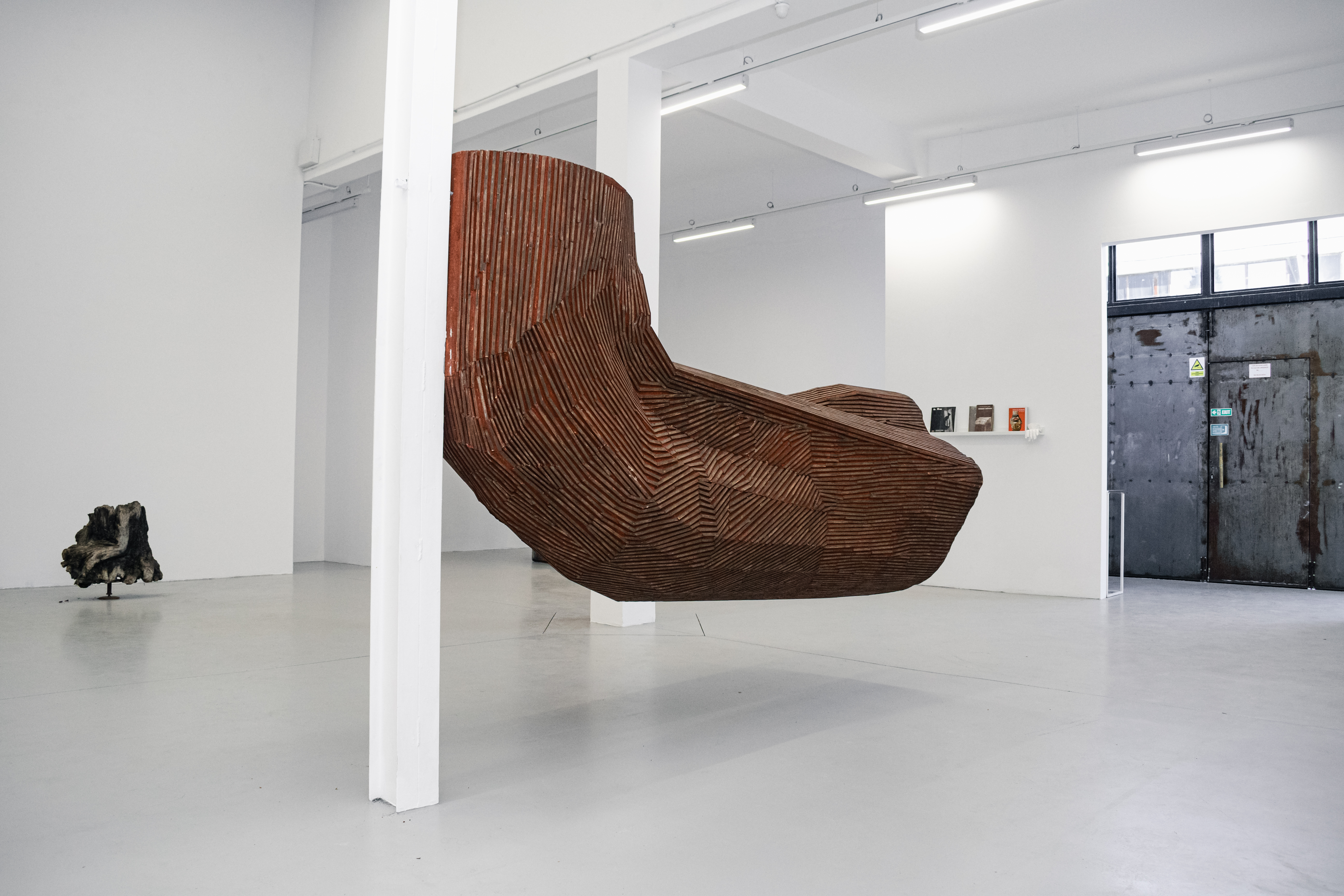
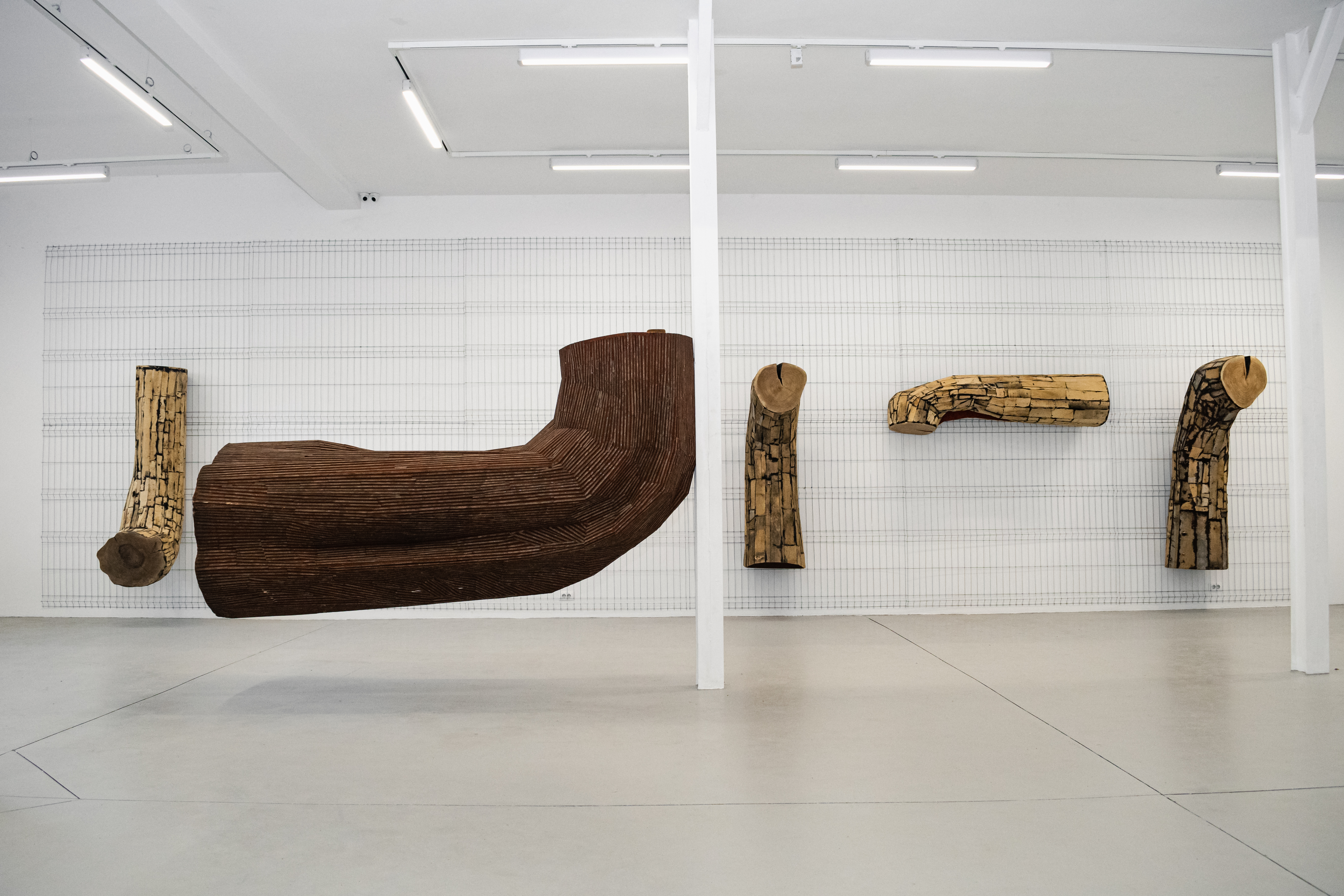
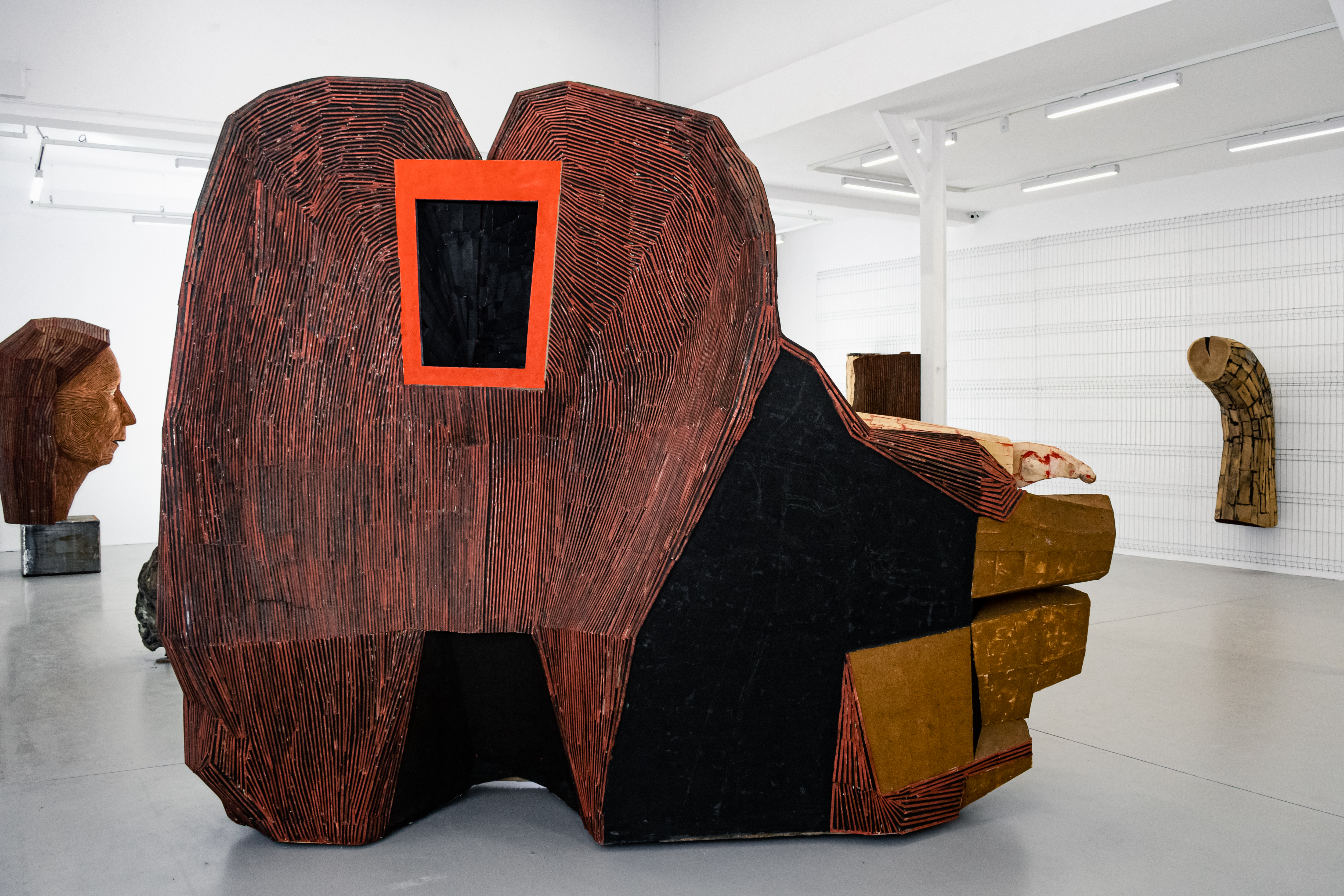
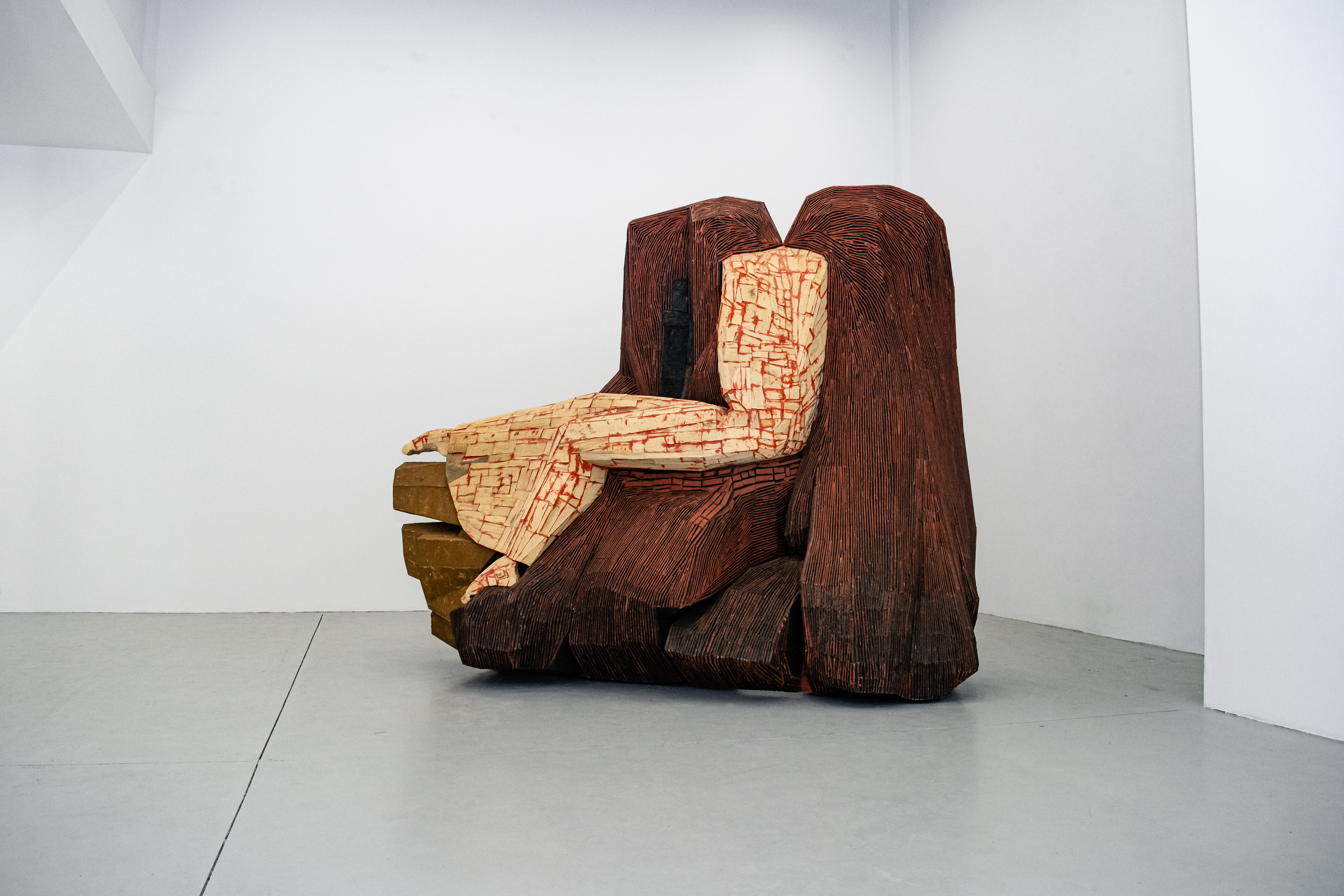
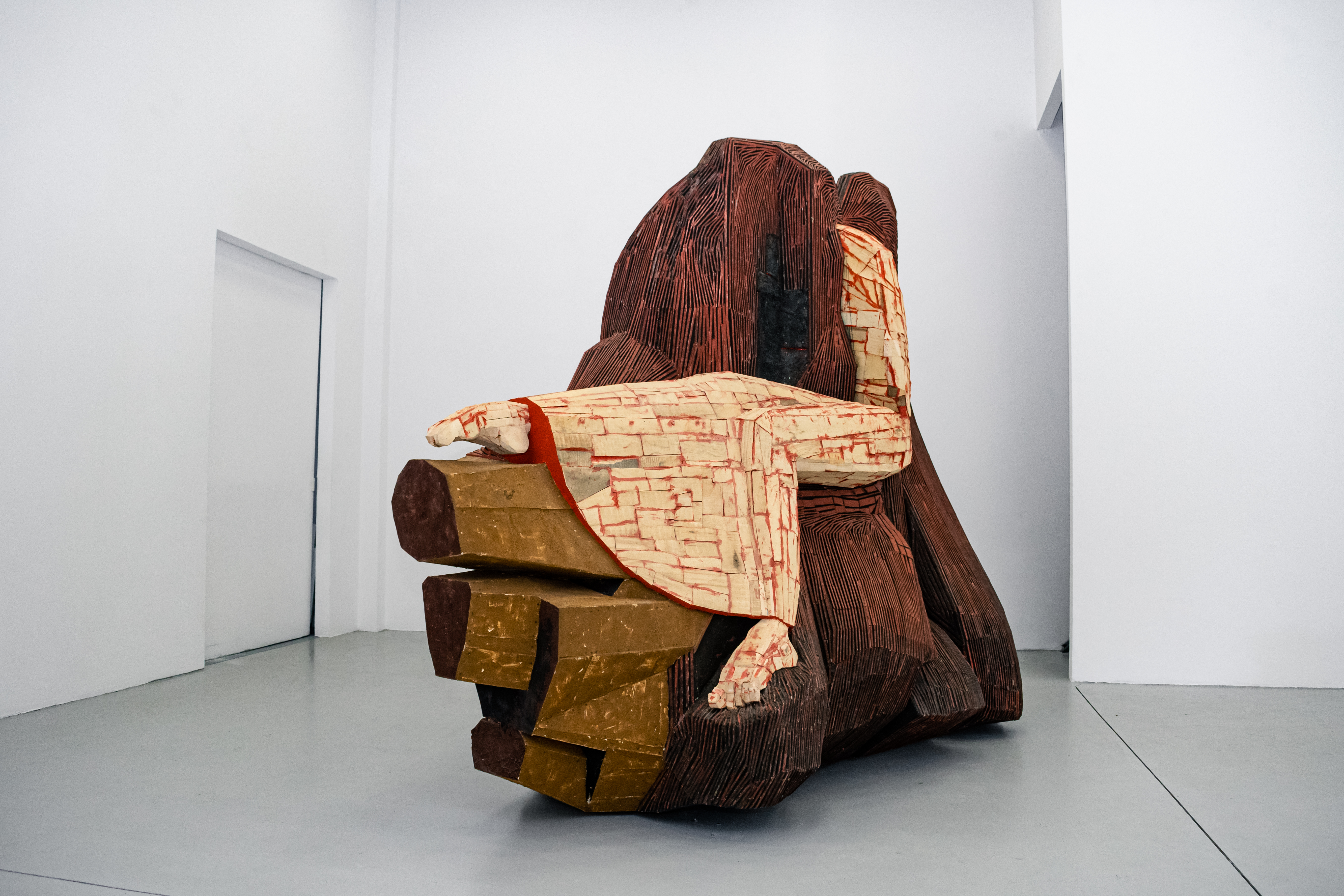
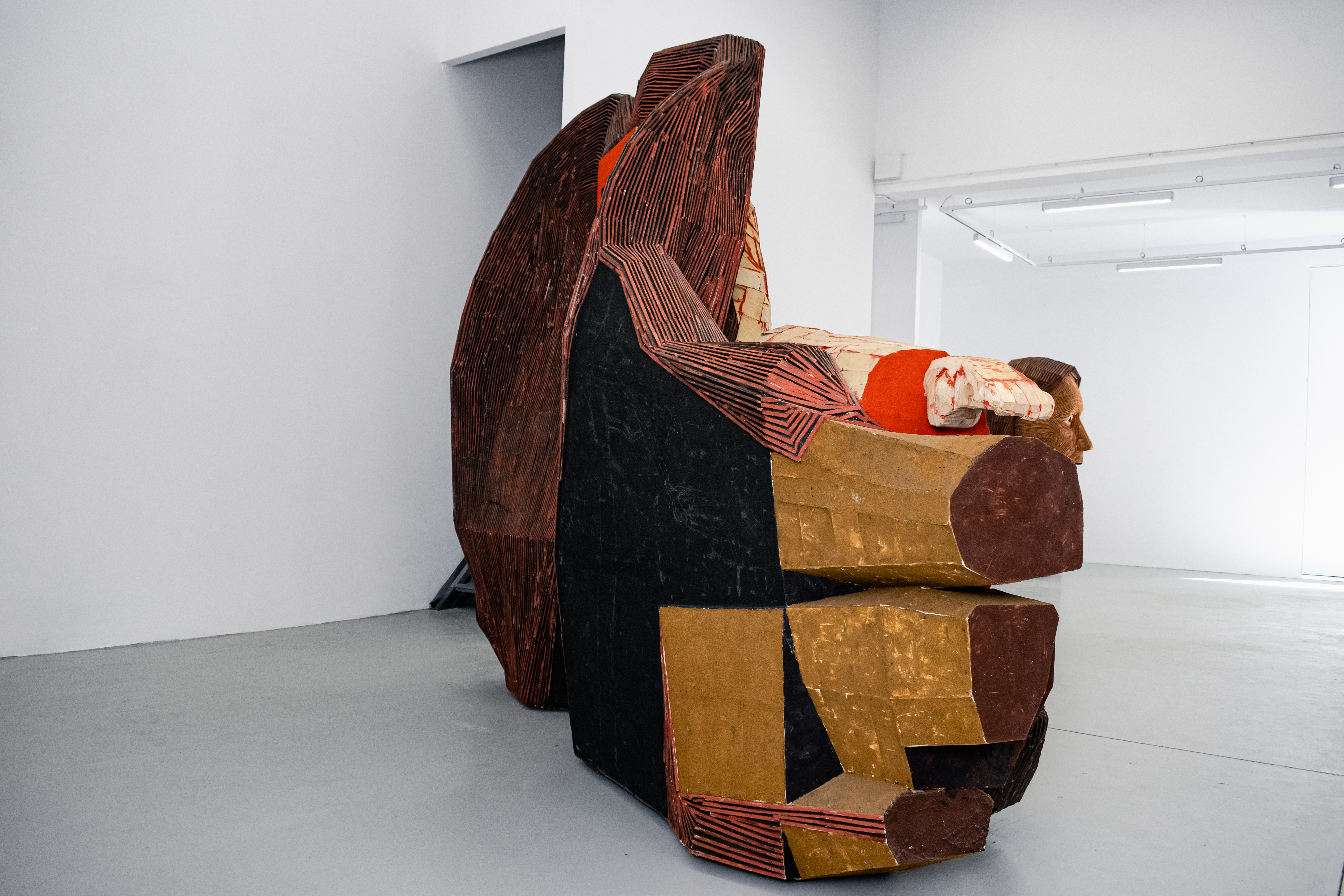
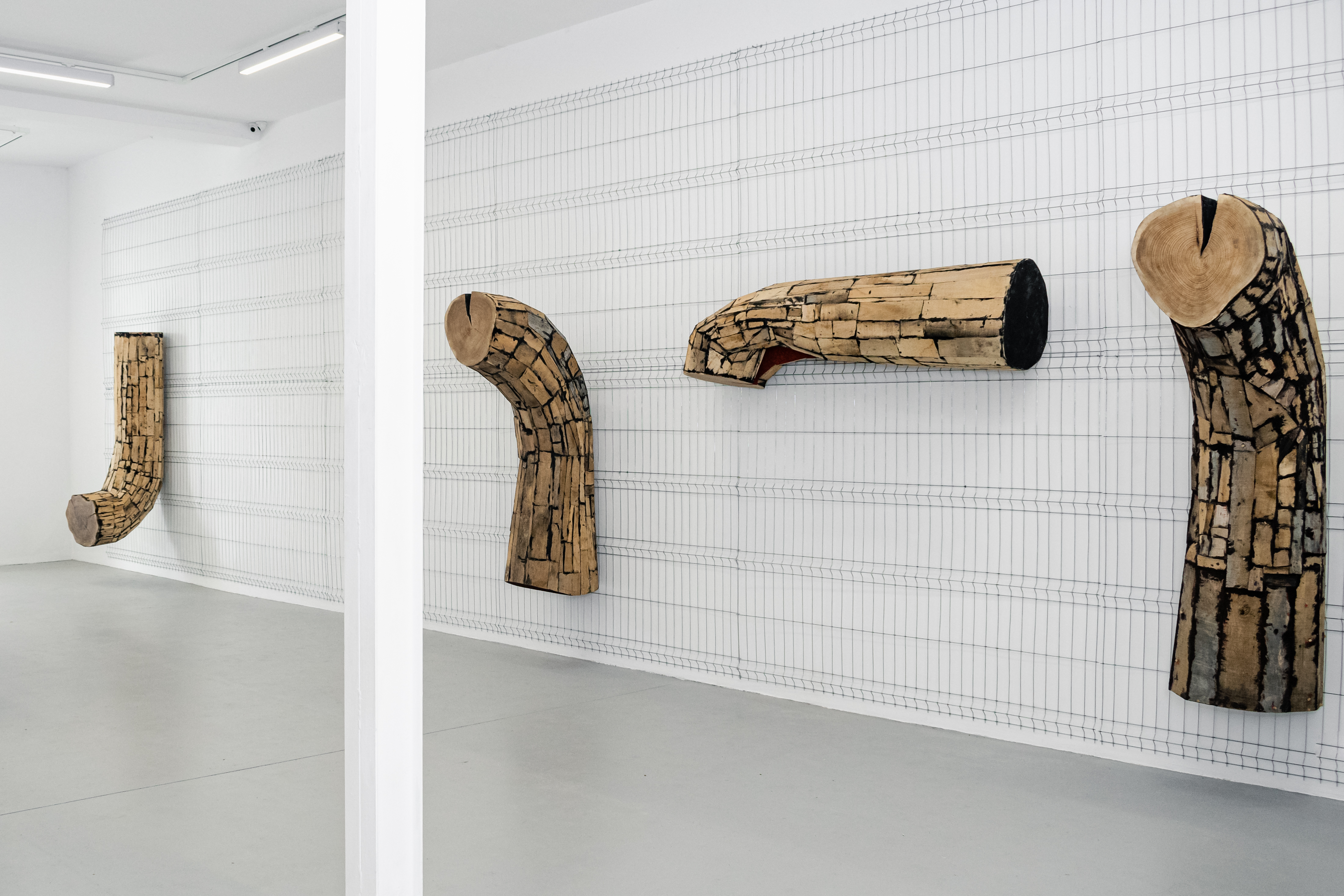
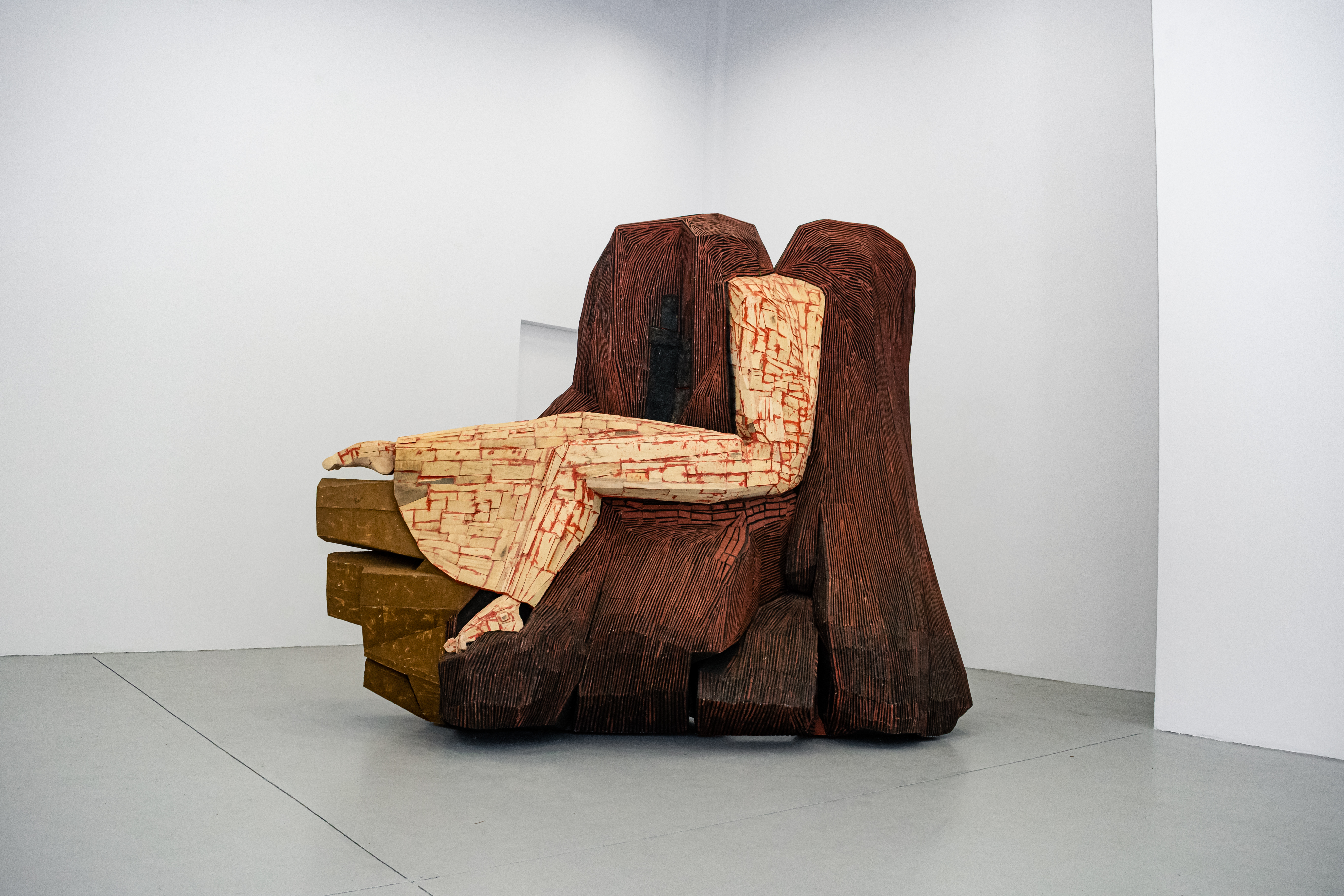
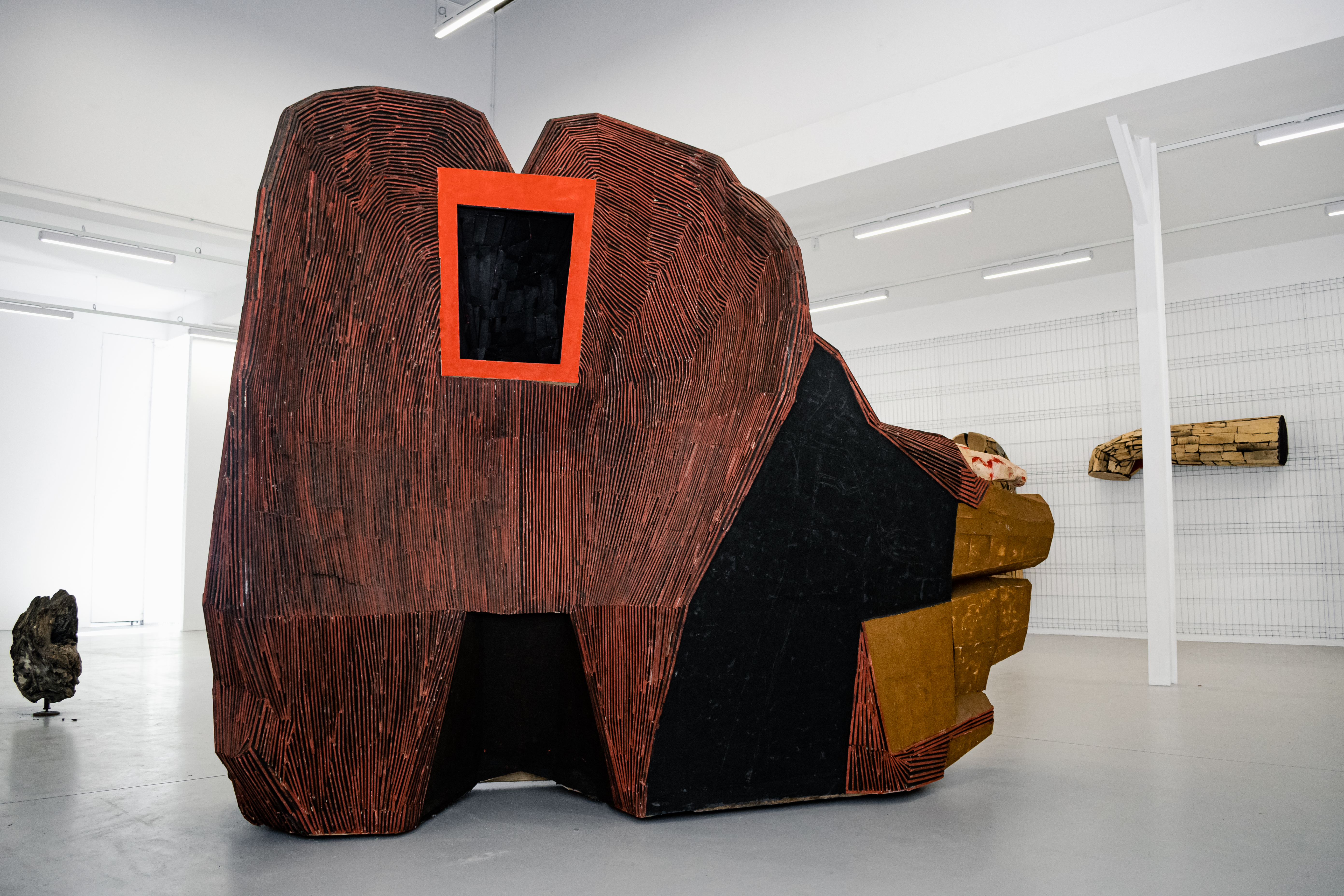
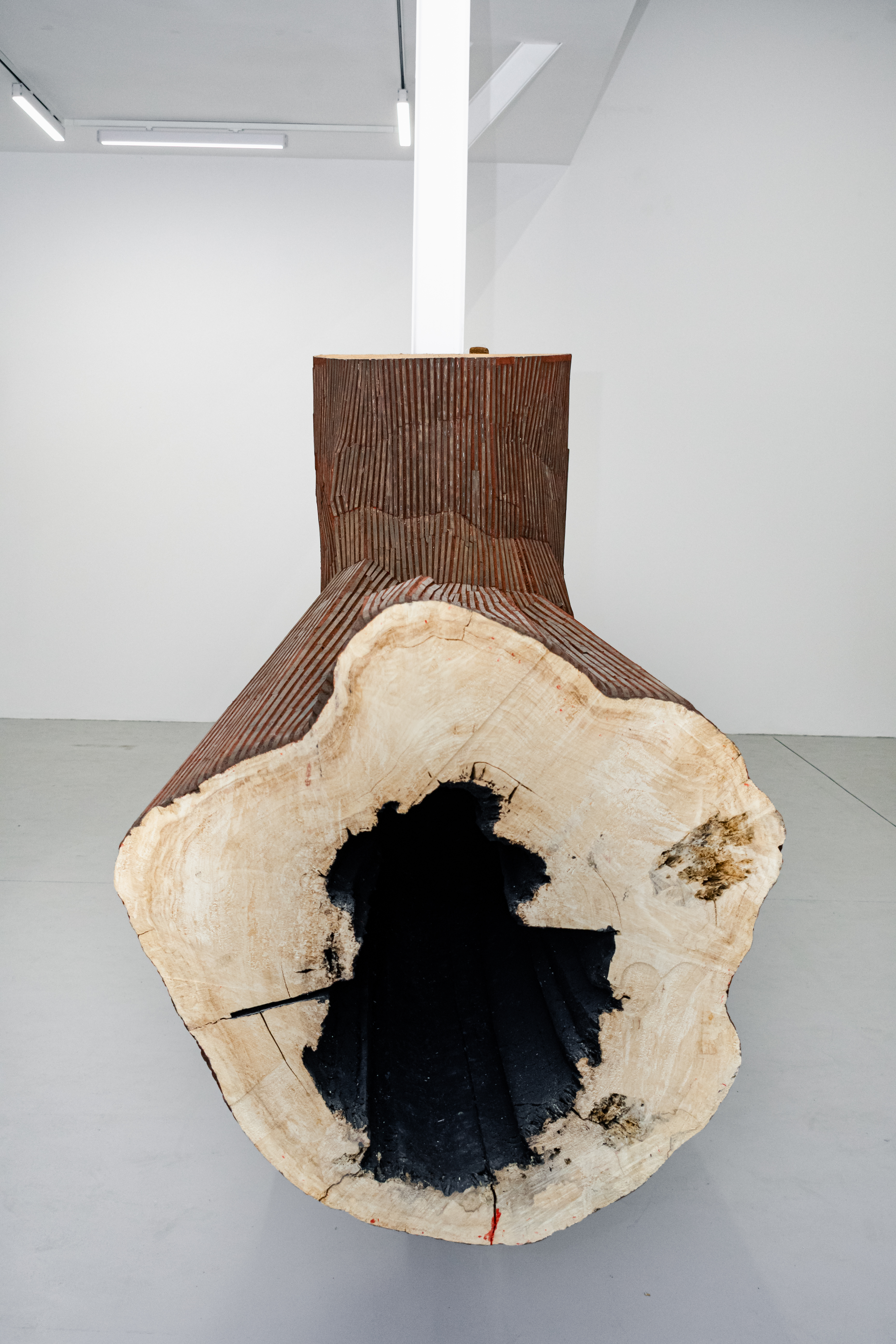
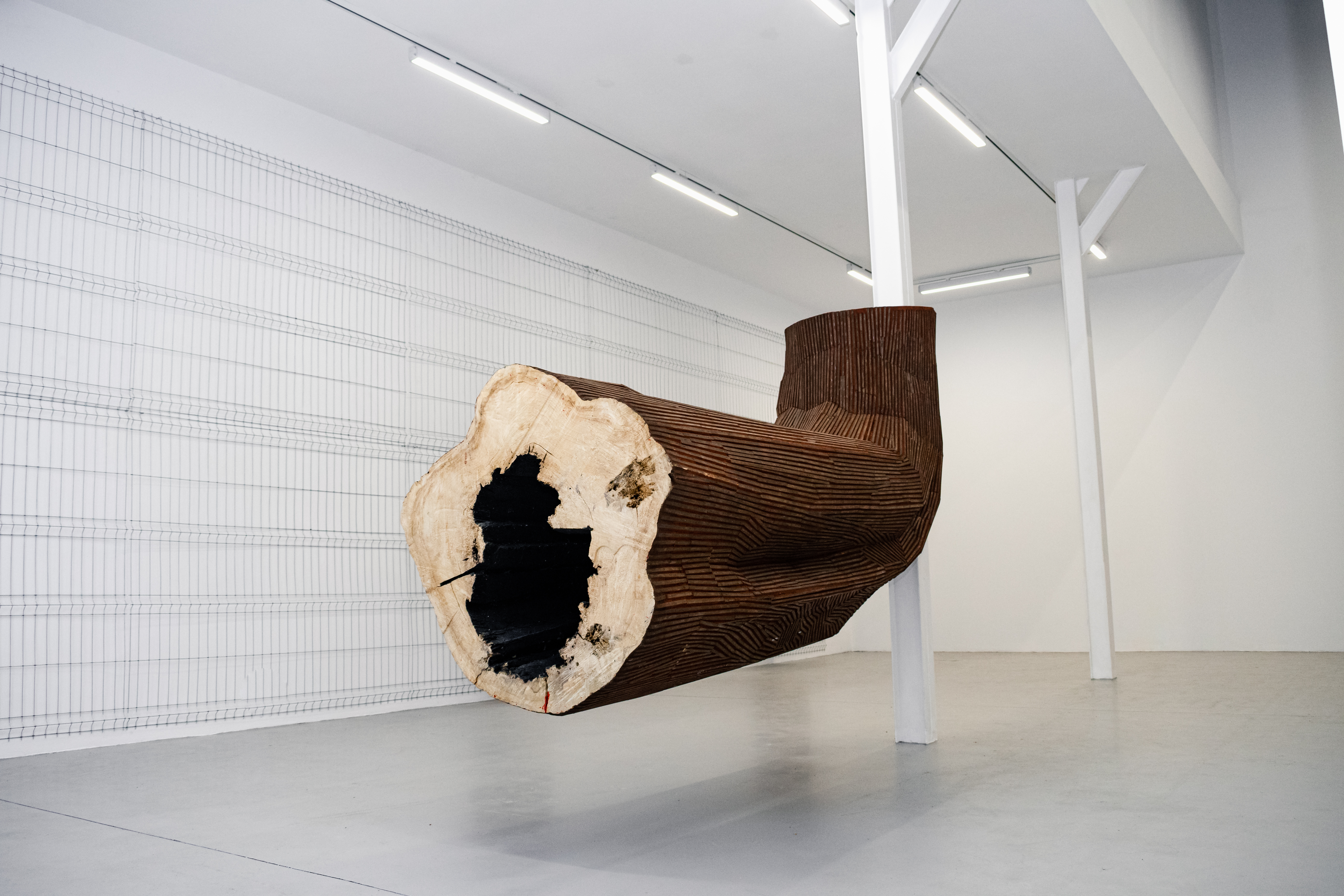
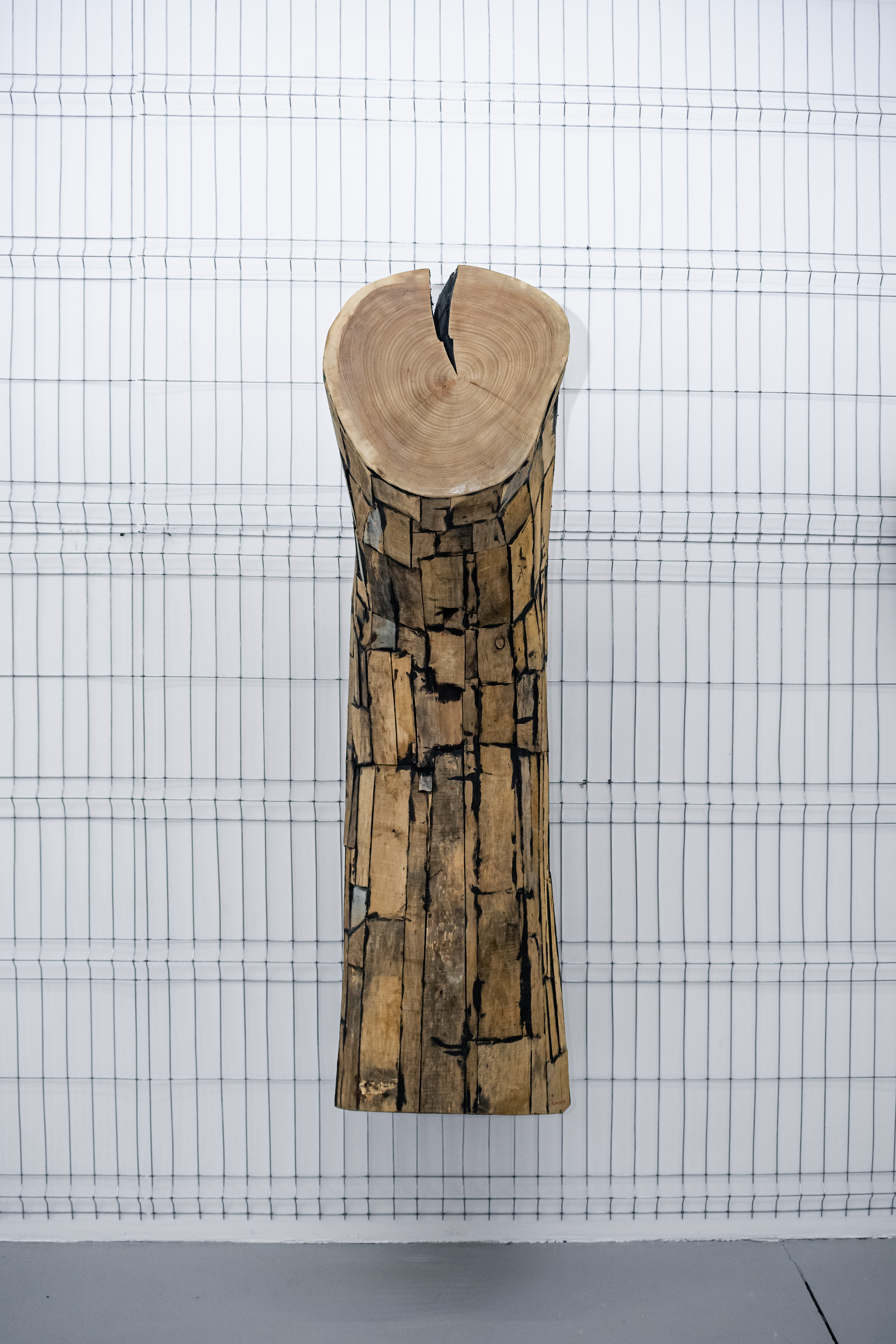
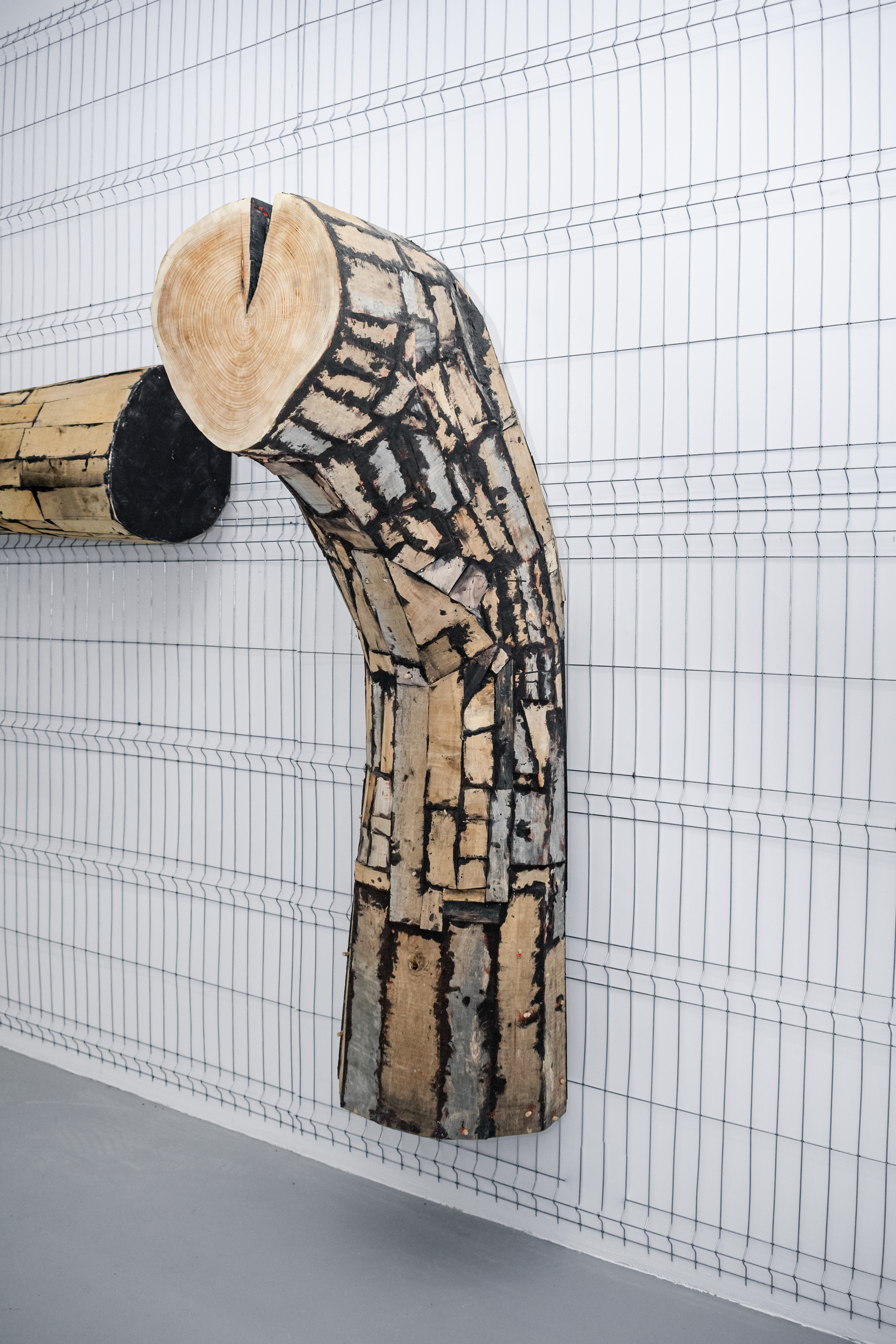
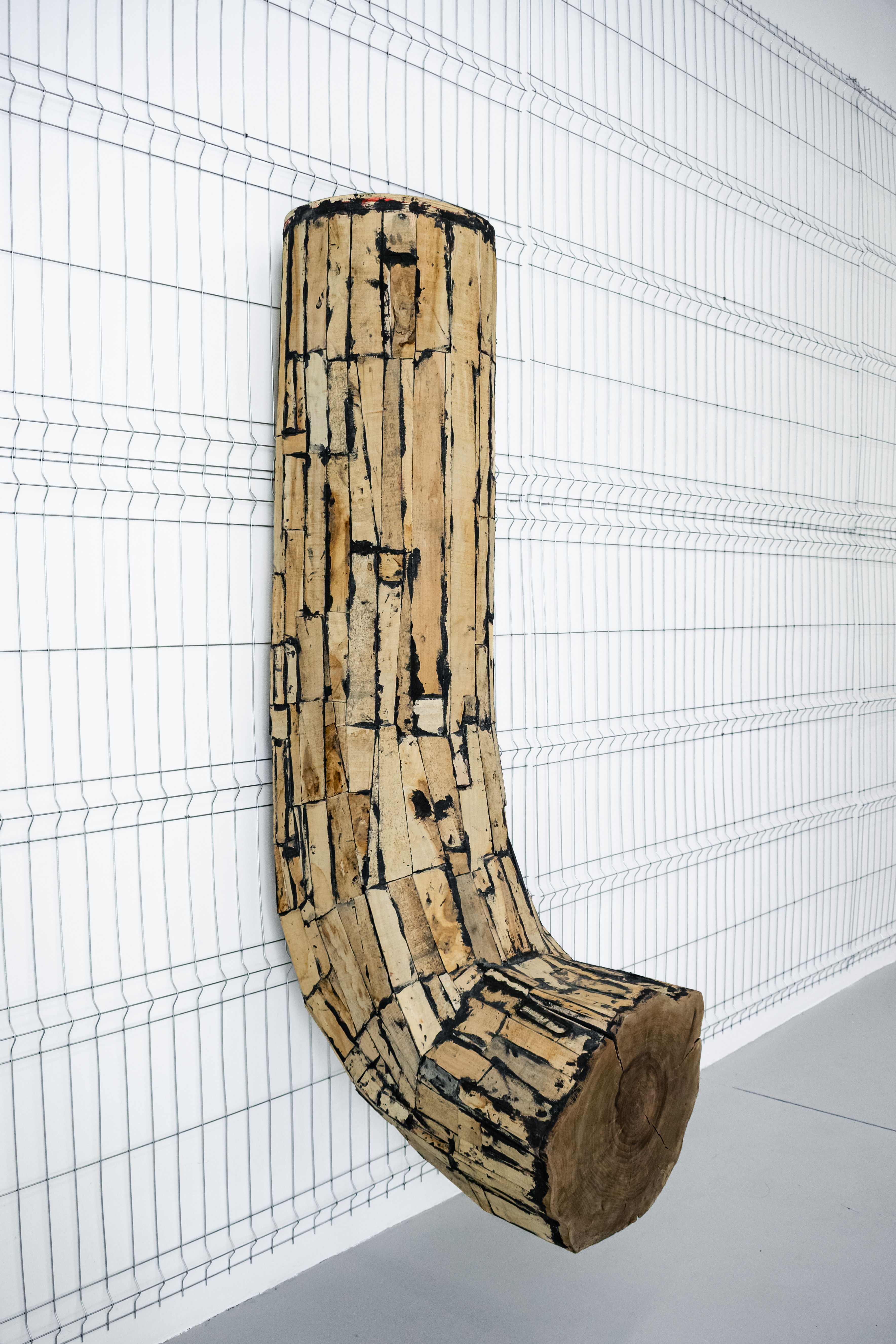
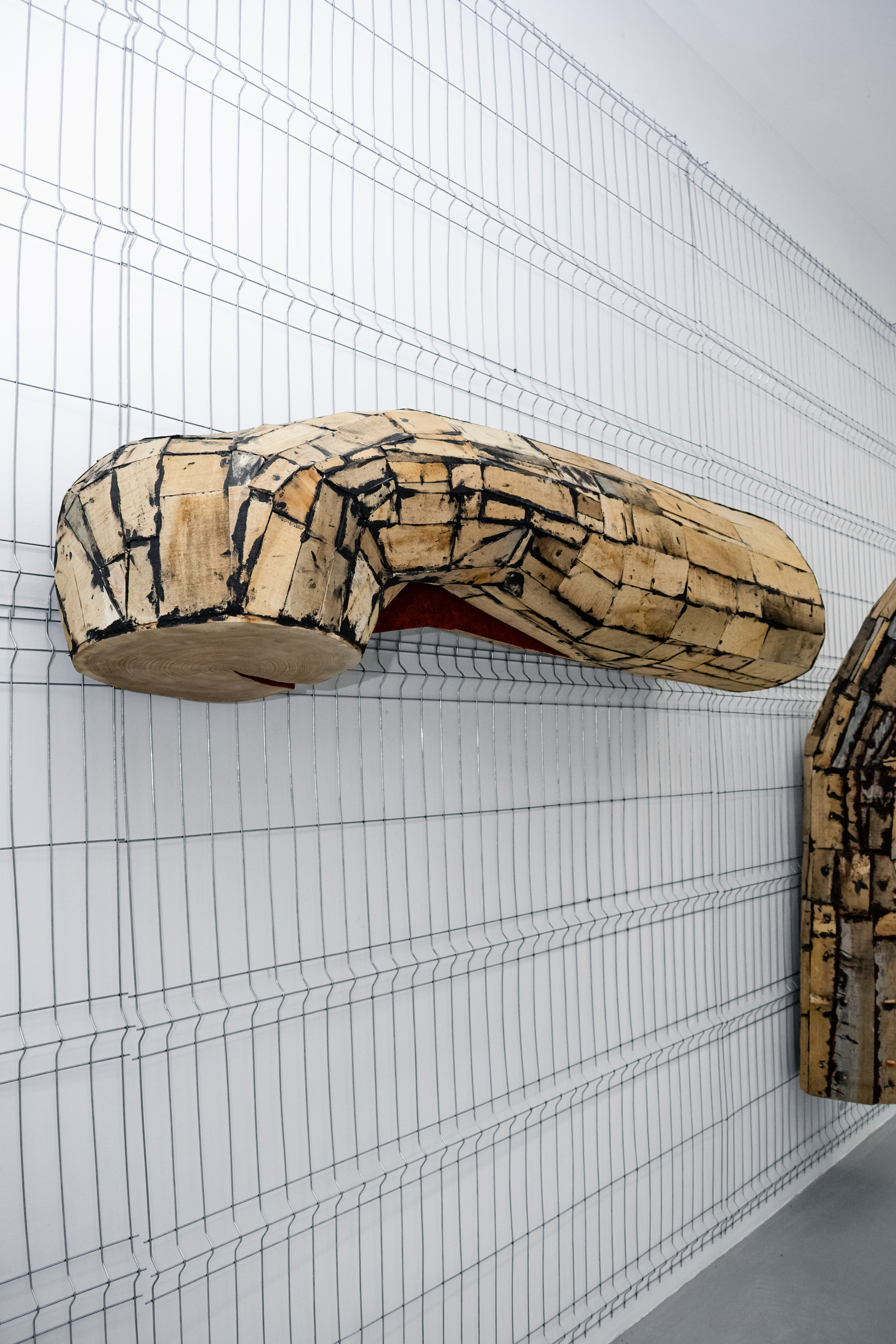
Paradoxically, however, beyond the processual approach, wood, this archaic everyday material,Minduces an archetypal aura. It is precisely this tension, between process and representation, that transgresses and marks the entirety of the sculptor’s oeuvre. In order not to squander that which has the force to extract, through contrast, what is essential, his new solo exhibition aims to articulate this dualism through a corpus of recent works: on the one hand, through large-scale works with iconic charge, such as “Jacob’s Fight with the Angel”) or “Tattoo [Portrait F.V.]”; and on the other hand, through more recent pieces from his research into the morphology of materials, which, although at first sight seem devoid of figurative traits, nonetheless carry the latent aura of a character. These fall under the motif of the “trophy”: „Trofeu Găunos” (“Hollow Trophy”), “Trophies”, and “Horizontal Trophies”.
The trophies are, themselfes, tubular bodies, tree trunks felled, pointing toward the alarming and accelerated situation of deforestation. Their placement, whether laid on the floor or suspended on the wall as trophies of new industrialization, accentuates this critical dimension. They become personifications of severed trunks, which seem to bend after the blow. This curling becomes also a compositional sign, recognizable in many of Roman’s works that take the human body as theme. This tragic destiny is also suggested through the treatment of the surface, where veneer of a different wood species than the one it covers is polished to the smooth, impersonal finish of a furniture piece, evoking the domestic and ubiquitous laminated parquet. The verses of Ștefan Ivaș, from which the title of this presentation was inspired, complete this direction perfectly, evoking the state of the Anthropocene: „doar tăiatul e-o treabă de adult / pentru că mila schimbă gustul cărnii” (“only cutting is an adult’s job / because pity changes the taste of meat”).
Not so, however, are treated the surfaces representing carnation in the statuary groups or portraits: these are covered with much narrower and shorter slats, with thick pulp of color coating them, fixed by staples. “What?!, Roman is doing a Sisyphean labor now, in his old age?”, another sculptor
from the Combinat area exclaimed during the installation. Beyond these elements, the surface is sometimes treated with areas of sawdust fixed in a restrained chromatic range, dominated by earthy tones such as ochre, brown, sienna, vermilion red, and black. At the same time, the vertically placed wooden slats accentuate monumentality, the fundamental trait of sculpture as a generous volume that occupies and symbolizes the site-space.
The represented figures appear pneumatic, devoid of a bony structure. They are constituted as external membranes of the sculptural volume, disconnected from the notion of a rigid core, projecting the sensation of fluid pressure from within the volumetric container. Thus, Mircea Roman not only continues a locally well-established portrait tradition, but also asserts his own searches, the fruit of long reflection and morphological elaboration.
— Horațiu Lipot
Installation Views
Works
Interested in the Exhibition?
For inquiries about available works, artist information, or to arrange a visit, please get in touch.
Inquire